CALL FOR PAPERS (1st Circular)
[A downloadable PDF-version is found under 'Curriculum vitae']
Presentation
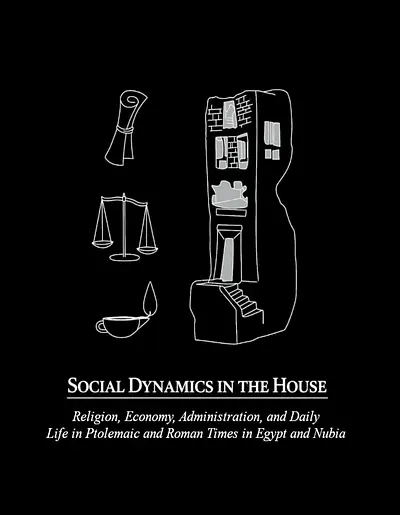
This international conference aims to bring together scholars from diverse fields within Egyptology and Ancient History—epigraphy, archaeology, anthropology, art history, the history of religions, papyrology, and related disciplines—to explore the house as a central space of social interaction in Ptolemaic and Roman Egypt and Nubia. Far from being a purely private or domestic sphere, the household constituted a key locus in which religious practices, economic activities, administrative processes, and everyday routines intersected and mutually shaped one another.
The conference focuses on domestic spaces as places of ritual practice, examining household cults, protective and apotropaic practices, and the material and textual expressions of lived religion within the home. At the same time, it addresses the socioeconomic and administrative dimensions associated with the household and its areas of influence, including property management, taxation, labour organization, and the interface between domestic units and broader institutional structures. Finally, the conference seeks to reconstruct aspects of daily life—such as production, consumption, storage, and social interaction—through evidence drawn from archaeology, iconography, and textual sources.
By foregrounding the house as a dynamic social space, the conference encourages a holistic approach to domestic life in Ptolemaic and Roman Egypt and Nubia, highlighting continuities and transformations across periods, regions, and social groups.
Publication of a monograph derived from the academic encounter
Languages of the conference: English
Structure of the Conference
The conference will be organized around three main thematic panels:
1. Household Religion
This panel will explore religious practices embedded in domestic contexts, including household cults, ancestor veneration, protective deities, ritual objects, and the materiality of domestic religion. Contributions may address the relationship between official temple cults and private religious practices, as well as questions of agency, gender, and social status in household ritual life.
2. Social and Economic Dynamics in the House
This panel focuses on the household as an economic and social unit. Topics may include production and consumption practices, craft activities, storage and redistribution, family structures, gendered divisions of labor, and the role of the house in local and regional economic networks. Papers may also consider the interaction between domestic spaces and administrative mechanisms, such as taxation, census practices, and legal documentation.
3. Daily Life and Domestic Practices
This panel addresses everyday activities within and around the house, reconstructing patterns of daily life through archaeological remains, iconography, and texts. Possible themes include food preparation, hygiene, childhood and aging, mobility within domestic spaces, and the sensory and experiential dimensions of living in the house.
Chronological and Geographical Scope
The papers presented will cover a broad geographical range within Egypt and Nubia, and a chronological framework spanning the Ptolemaic and Roman periods. Comparative approaches and diachronic perspectives are particularly welcome, as they allow for the identification of long-term developments as well as regional and social variability in domestic practices.
Methodological Approaches
The conference strongly encourages interdisciplinary contributions that combine different types of evidence and methodological perspectives. Contributions may include but are not limited to the following approaches:
• Epigraphy
• Papyrology
• Archaeology
• Anthropology
• History of Art
• History of Religions
• Gender Studies
By fostering dialogue between disciplines and methodologies, the conference aims to advance new perspectives on domestic life and to refine analytical tools for the study of households in the ancient Mediterranean world.
Objectives
The main objectives of the conference are:
• To reassess the role of the household as a central space of religious, economic,
administrative, and social activity in Ptolemaic and Roman Egypt and Nubia.
• To promote interdisciplinary dialogue and methodological innovation in the study of domestic contexts.
• To highlight the diversity of domestic experiences across regions, social strata, and chronological phases.
• To contribute to broader debates on lived religion, everyday practices, and social
organization in the ancient world.
Format and Modality
The conference is conceived as an in-person international meeting, with each panel consisting of thematic sessions followed by extended discussion periods. This format is intended to encourage in-depth scholarly exchange and collaborative reflection. Depending on logistical possibilities, selected contributions may be made available in advance to facilitate discussion, and the organizers envisage the possibility of a collective publication or edited volume as a long-term outcome of the conference.
Invited Keynote Speakers
• M. Minas-Nerpel (Universität Trier)
• W. Müller (Swiss Institute for Architectural and Archaeological Research on Ancient Egypt, Cairo)
• W. Wendrich (Politecnico di Torino)
Important Dates, Places, and Data
• Call for papers: October 2026. Abstract submissions deadline: 30th November
• Results and notification of the acceptance of selected contributions: Mid-January
• Provisional program: 1st March
• Final program: 1st April
• Conference days: 14th–16th June 2027
• Derived peer-reviewed publication
• The conference will take place in: Colegio de Málaga (Facultad de Filosofía y Letras) Calle Colegios 2, 28801, Alcalá de Henares (Madrid)
Presentation format
• Presentations will be delivered within a maximum of twenty minutes.
• Speakers may use a PowerPoint-style presentation (it is recommended to convert it to PDF) during their delivery.
• At the end of each thematic panel, time will be allocated for discussion and reflection on the papers presented.
• The language of the conference is English.
For interested scholars, MA, and PhD students in participating, please, send abstracts of no more than 250 words with 5 keywords before 30th November to the onference email:
[email protected] Please, note that abstracts will go under a peer-review double-blind selection.
Notifications of acceptance will be sent in mid-January 2027.
A second circular will be published and disseminated in January regarding information on accommodation, travel and means of transport, and other important data.